Watch Your Step: Anticipated Perception for Humanoid Locomotion
Perceptive locomotion policies typically observe a dense robot-centric elevation map, although only the terrain beneath and around the next footsteps informs the control decision.
Characterizing LLM reasoning remains an open challenge, as many existing benchmarks isolate specific reasoning skills, rely on external knowledge, or are costly to extend.
We present ADAPT, an end-to-end framework for interactive, text-conditioned humanoid whole-body control.
Designing effective reward functions remains a major bottleneck in Reinforcement Learning (RL).
Deploying humanoid robots in unstructured terrain remains an open problem.
Proximal Policy Optimization (PPO) has become the de facto standard for training legged robots, thanks to its robustness and scalability in massively parallel simulation environments like IsaacLab.
Whole-body humanoid locomotion is challenging due to high-dimensional control, morphological instability, and the need for real-time adaptation to various terrains using onboard perception.
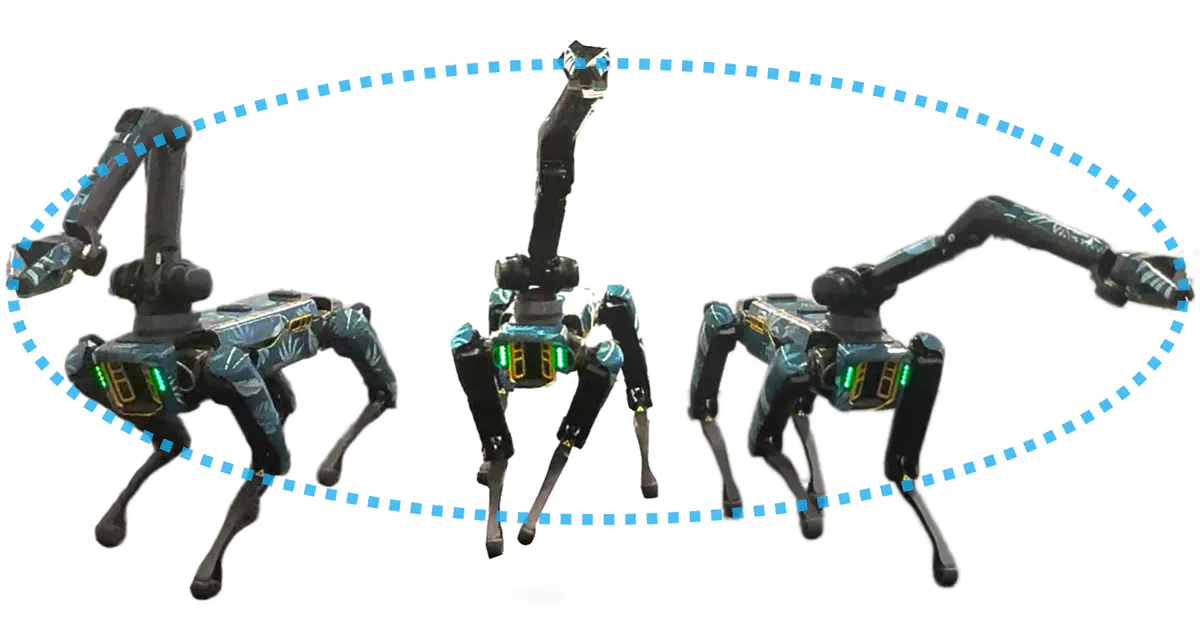
Collaborative transport requires robots to infer partner intent through physical interaction while maintaining stable loco-manipulation.
World models promise a paradigm shift in robotics, where an agent learns the physics of its environment once and then acquires behaviors efficiently.
Learning-based control methods typically assume stationary system dynamics, an assumption often violated in real-world systems due to drift, wear, or changing operating conditions.
We investigate what specific design choices enable successful online reinforcement learning (RL) on physical robots.

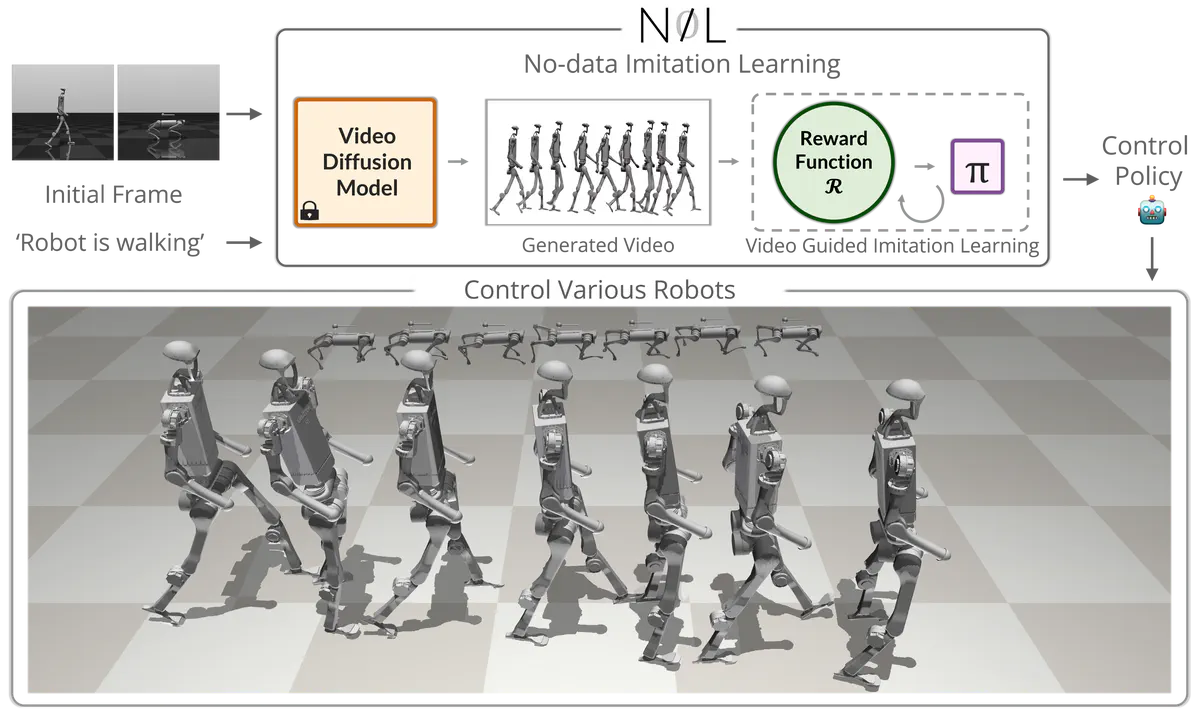
We propose a novel imitation learning framework that combines video-embedding similarity and image-based similarity to learn 3D motor skills from 2D-generated videos, demonstrating strong performance across various morphologies and tasks.
Curriculum learning has demonstrated substantial effectiveness in robot learning.

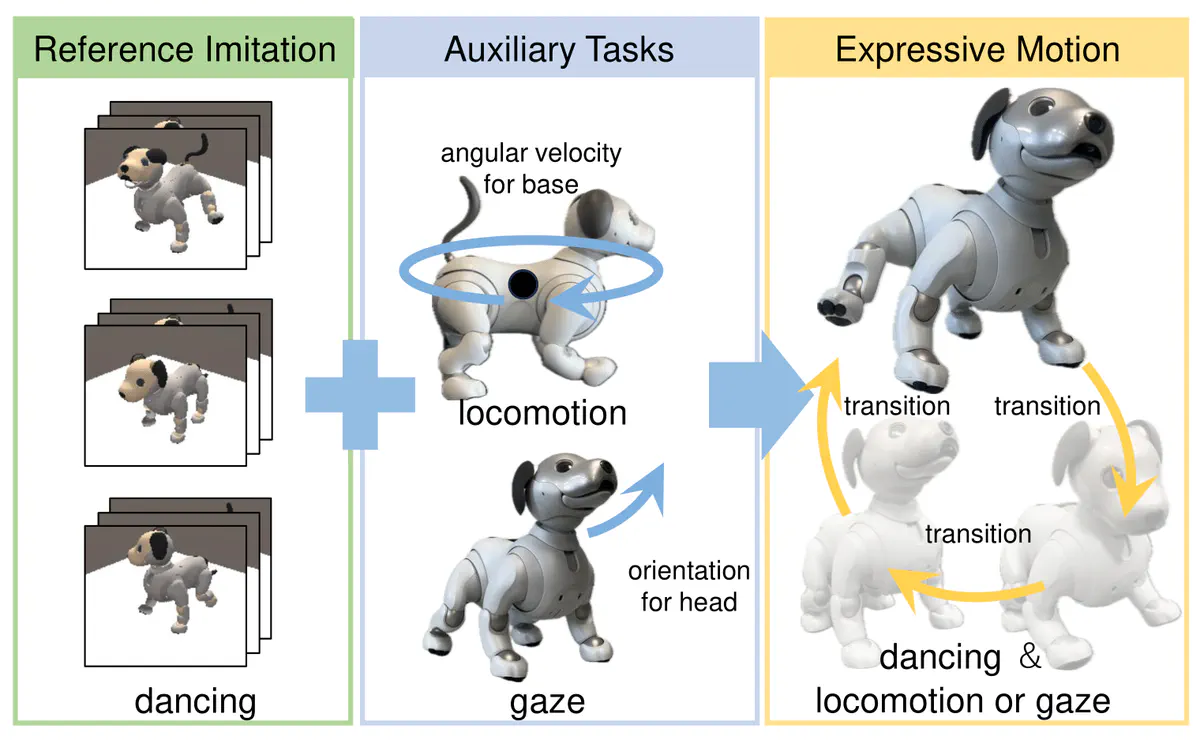
Effective motion representation is crucial for enabling robots to imitate expressive behaviors in real time, yet existing motion controllers often ignore inherent patterns in motion.

Soft robots offer unmatched adaptability and safety in unstructured environments, yet their compliant, high-dimensional, and nonlinear dynamics make modeling for control notoriously difficult.

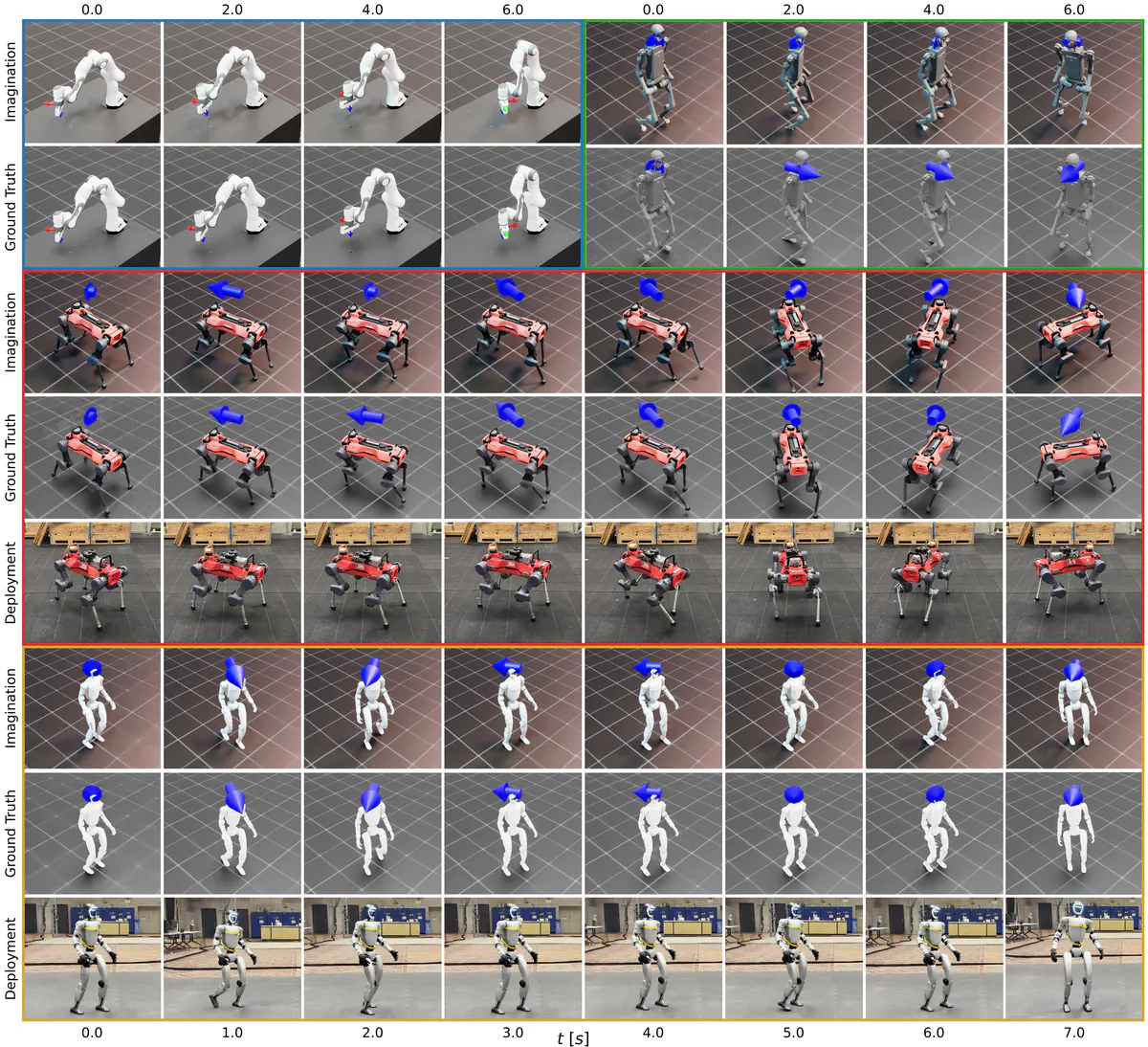
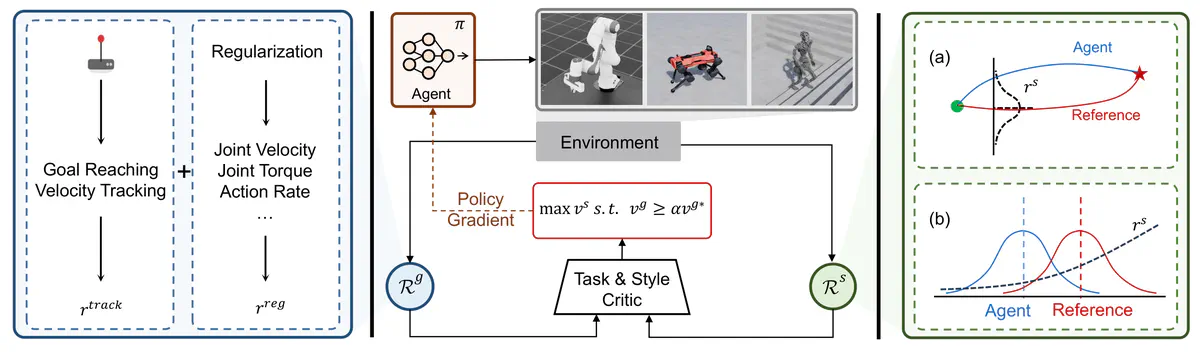
We propose a constrained style learning approach that balances task performance and stylistic imitation.
This survey provides a comparative analysis of feature-based and GAN-based approaches to learning from demonstrations, with a focus on the structure of reward functions and their implications for policy learning.

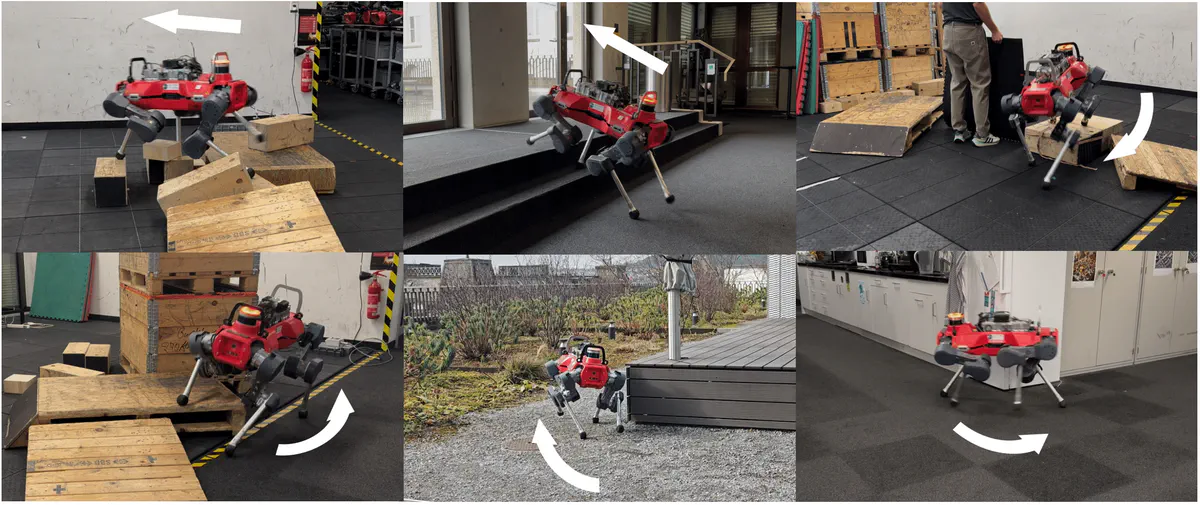
We propose a hierarchical reinforcement learning method that extends flat-terrain skills for complex terrain navigation.

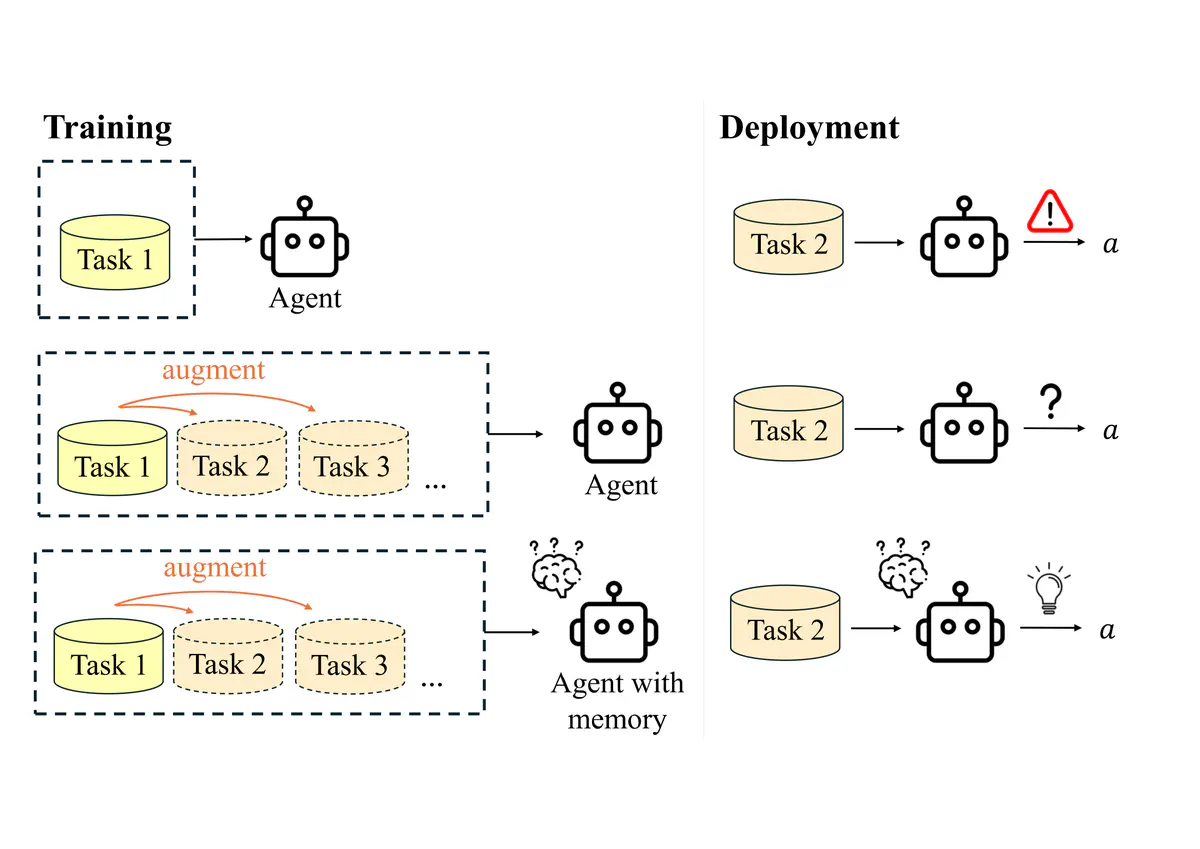
We propose a memory-enhanced augmentation method for reinforcement learning that extends OOD generalization with context-awareness.

We propose an efficient motion representation method with frequency-domain parameterizations that enable expressive policy learning.

We propose a BNN-based dynamics learning method using physical priors for efficient policy learning.
Large language model systems face important security risks from maliciously crafted messages that aim to overwrite the system's original instructions or leak private data.
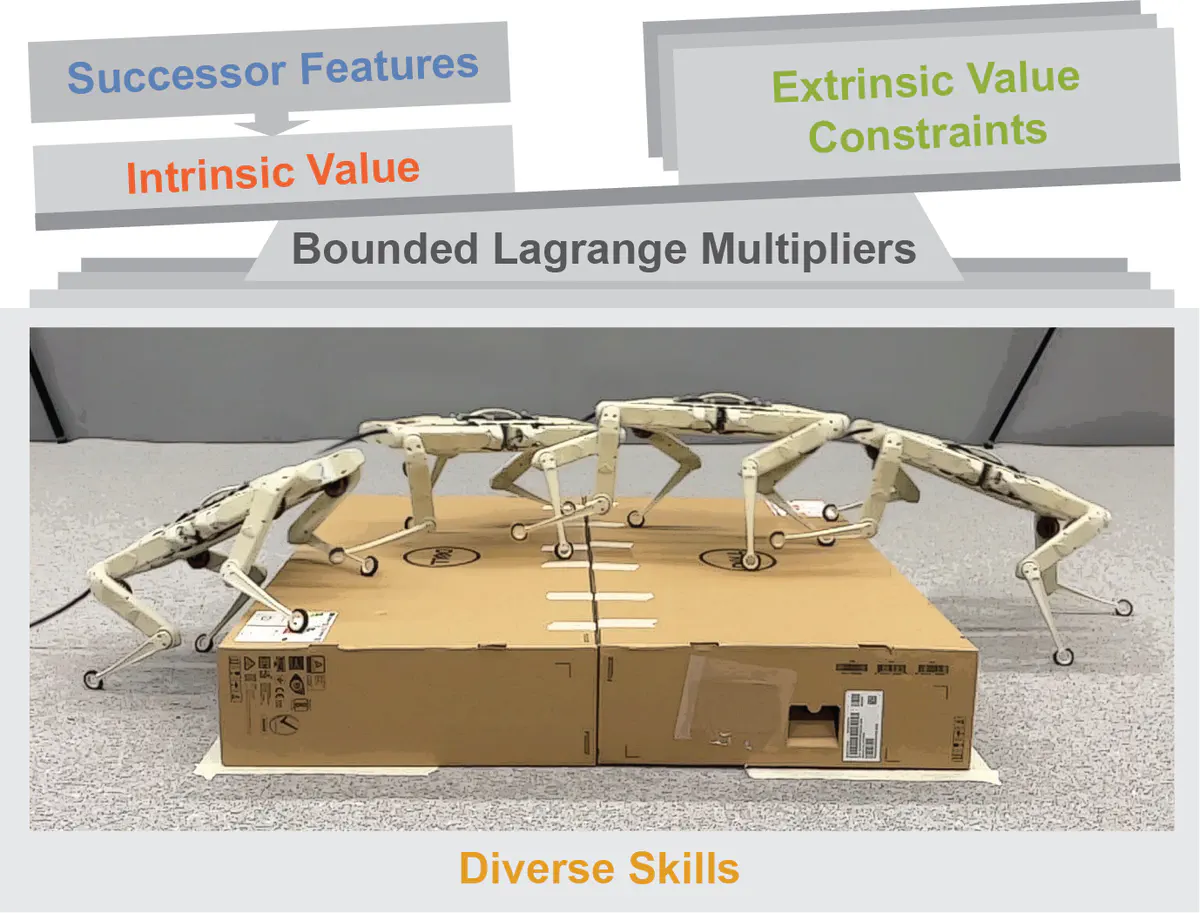
We propose a constraint grouping method for diversity optimization while maintaining near-optimality.

We propose a self-supervised, structured representation and generation method that extracts spatial-temporal relationships in periodic or quasi-periodic motions.


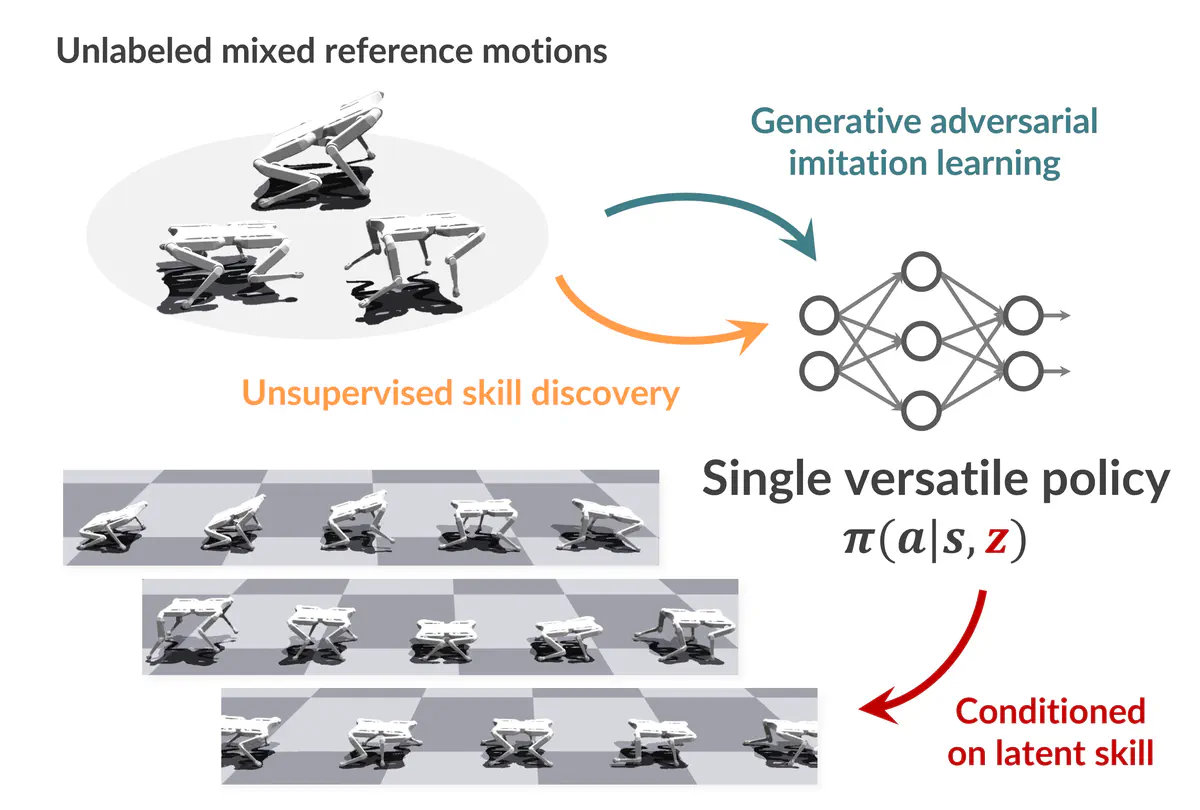
We propose a generative adversarial method for inferring reward functions from partial and potentially physically incompatible demonstrations for successful skill acquisition where reference or expert demonstrations are not easily accessible.